
Chronic Pain Research Study
Researchers at the University of Utah are conducting a study on adults diagnosed with chronic pain who take opioids for pain daily or almost daily. This study will evaluate a new, non-invasive method of brain stimulation that shows promise as a therapeutic intervention for brain disorders.
Fast Facts

Diagnosed with Chronic Pain and Taking Opioids Daily or Almost Daily

Ages 18+

Compensation Provided

Conducted in
Salt Lake City, UT
Study Background
Researchers at the University of Utah are conducting a study to evaluate a new, non-invasive method of brain stimulation. This study aims to explore its potential as a therapeutic intervention for chronic pain and other brain disorders.
The purpose of this study is to investigate how this innovative brain stimulation technique may offer relief for adults diagnosed with chronic pain who have used opioids for the last 3 months and are eligible for an MRI scan. The non-invasive method is designed to target specific brain regions involved in pain perception, providing a potential treatment for chronic pain.
By participating in this study, individuals will help contribute to important research that could lead to new therapeutic options for managing chronic pain and improving quality of life. The study will also assess the safety and effectiveness of this brain stimulation method, offering participants an opportunity to access cutting-edge treatments.
Study Background
Researchers at the University of Utah are conducting a study to evaluate a new, non-invasive method of brain stimulation. This study aims to explore its potential as a therapeutic intervention for chronic pain and other brain disorders.
The purpose of this study is to investigate how this innovative brain stimulation technique may offer relief for adults diagnosed with chronic pain who have used opioids for the last 3 months and are eligible for an MRI scan. The non-invasive method is designed to target specific brain regions involved in pain perception, providing a potential treatment for chronic pain.
By participating in this study, individuals will help contribute to important research that could lead to new therapeutic options for managing chronic pain and improving quality of life. The study will also assess the safety and effectiveness of this brain stimulation method, offering participants an opportunity to access cutting-edge treatments.
Additional Information
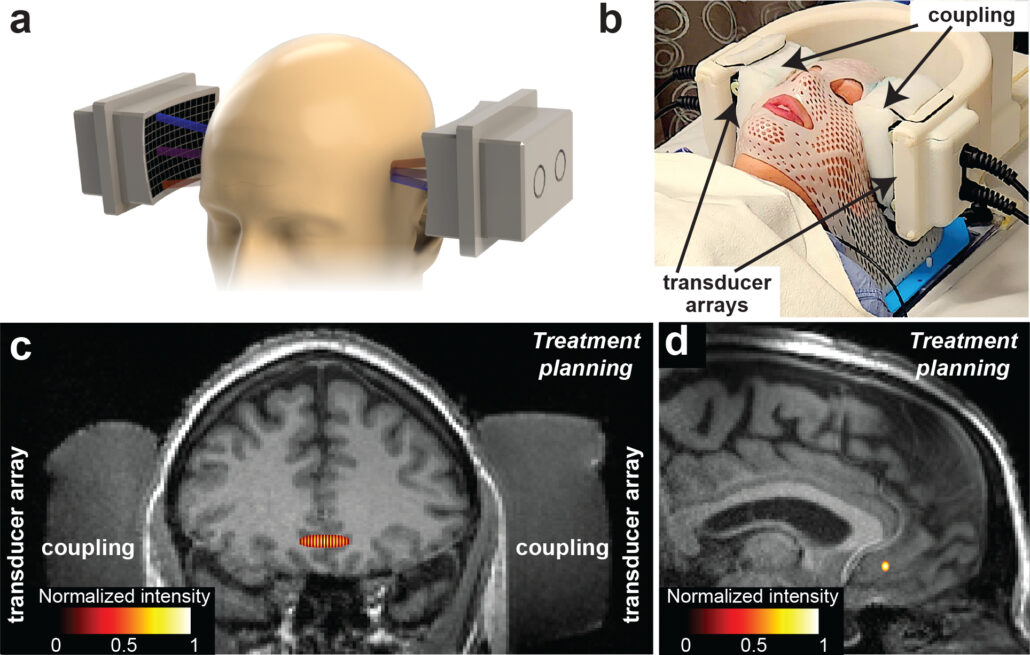
This study aims to explore the potential of low-intensity ultrasound as a non-invasive treatment option for chronic pain, especially for individuals who have been using opioids for long-term pain management. With advances in technology, it is now possible to deliver ultrasound to deep brain structures with high precision, which may help reduce pain, cravings, and mood-related symptoms.
By evaluating how this technique affects brain activity and behavior, the study seeks to determine whether ultrasound can provide a potential treatment for managing chronic pain. The goal is to assess its overall tolerability and its ability to target specific brain regions involved in pain processing.
You may qualify for this study if you meet the following criteria.
Inclusion Criteria:
- Aged 18 years or older
- Diagnosis of chronic pain
- Has used opioid pain medication daily or nearly every day for the past 3 months
- Able to participate in an MRI scan
Exclusion Criteria:
- A diagnosis of bipolar or schizophrenia
- Pregnant or breastfeeding
- A serious brain injury or neurologic disorder
- Receiving a different type of brain stimulation
- Active thoughts of suicide
Have a spinal cord stimulator
There are 7 study visits over the course of 5 weeks, including 5 visits involving MRI scans. The first 6 visits are in-person, and the last visit can be done virtually.
- Visit 1: Questionnaires and evaluation with a doctor
- Visit 2: First ultrasound stimulation (either sham or real), MRI scans before and after
- Visit 3: MRI scan
- Visit 4: Second ultrasound stimulation (real), MRI scans before and after
- Visit 5: MRI scan
- Visit 6: Third ultrasound stimulation (some trials will be real, others sham), MRI done simultaneously with stimulation
- Visit 7: Virtual or in-person debrief
Participants should be able to commute to the main University of Utah campus to attend in-person visits.
Receive $15 per hour of participation, up to $350 for completing all visits.
Participants are responsible for transportation costs to and from the University of Utah.