Have Been Taking Daily Prescription Opioids For 3+ Months
Able to Spend 3 Days & 3 Nights In The Sleep Lab
Compensation Provided
Conducted in South Carolina
Study Background
This study explores new ways to manage chronic pain without requiring participants to stop their current opioid medications.
Chronic pain can be incredibly disruptive to daily life, and long-term opioid therapy is a common—but risky—approach to pain management. Over time, opioids can lead to side effects like tolerance, dependency, and even overdose. Researchers at the Medical University of South Carolina (MUSC) are leading a study called ACTION to test two potential strategies for improving pain relief and quality of life for people on long-term opioid therapy.
This study does not require participants to reduce or stop their opioid medications at any point. Instead, it aims to find safer and more effective ways to enhance pain treatment.
Study Background
This study explores new ways to manage chronic pain without requiring participants to stop their current opioid medications.
Chronic pain can be incredibly disruptive to daily life, and long-term opioid therapy is a common—but risky—approach to pain management. Over time, opioids can lead to side effects like tolerance, dependency, and even overdose. Researchers at the Medical University of South Carolina (MUSC) are leading a study called ACTION to test two potential strategies for improving pain relief and quality of life for people on long-term opioid therapy.
This study does not require participants to reduce or stop their opioid medications at any point. Instead, it aims to find safer and more effective ways to enhance pain treatment.
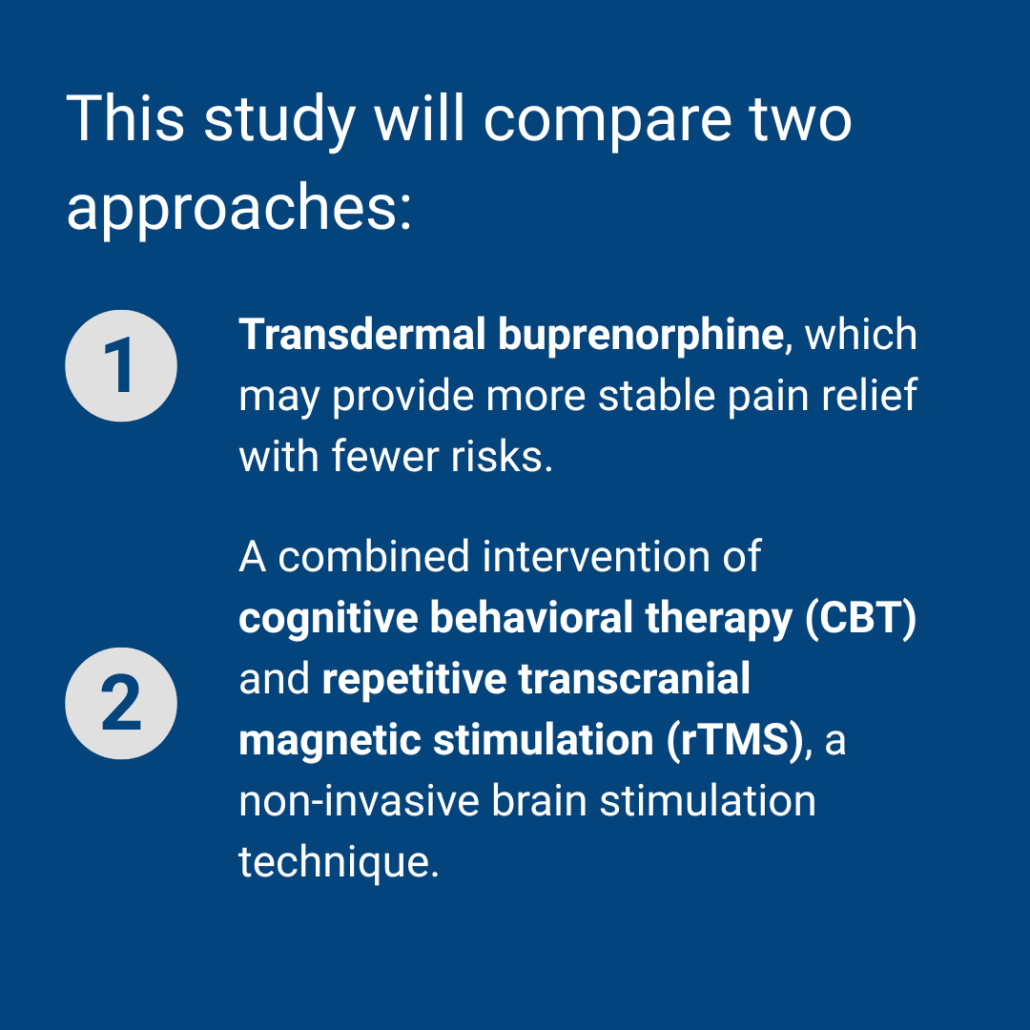
The ACTION study is being done to explore whether adding new treatments—like buprenorphine or a combination of CBT and rTMS—can help reduce pain and improve quality of life for people already taking opioids for chronic pain. The goal is to offer better, safer long-term pain management options.
You may qualify for this study if you meet the following criteria.
Inclusion Criteria:
Speak English
Able to undergo TMS scan (No magnetic implants or conditions or treatment that lower the seizure threshold)
Have been taking daily prescription opioid therapy for 3+ months
Able to spend 3 days and 3 nights in the sleep lab
Exclusion Criteria:
Not receiving methadone or buprenorphine treatment for opioid use disorder or pain
Not taking naltrexone
No known seizure disorder
No known allergy to buprenorphine
No signs of opioid misuse
No current major medical problem (e.g., moderate to severe liver disease, pancreatitis, chronic pulmonary disease, untreated sleep apnea, or hospitalization for an acute medical issue within the past 6 months)
No substance use disorder other than nicotine
Not pregnant
No significant cardiac condition (e.g., poorly controlled heart failure, current or past cardiac arrhythmia, sustained systolic blood pressure >180)
No significant metabolic disorder (e.g., labile diabetes, significant electrolyte abnormality)
No neurological disease (e.g., movement disorder, multiple sclerosis, moderate to severe brain injury)