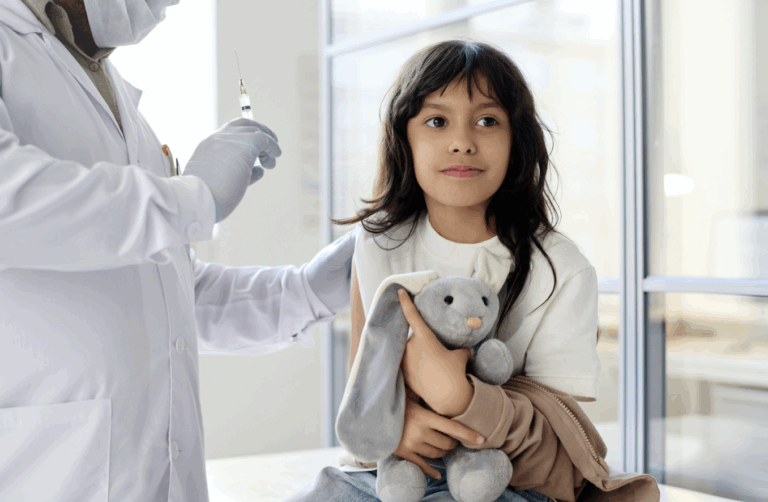
Covid Vaccine Study for High Risk Children
Researchers at Emory University are conducting a study in children ages 5–11 who are at higher risk for severe COVID-19 to learn how the updated Pfizer COVID-19 vaccine works and how it affects the immune system.
Fast Facts

Children
ages 5-11 years old

Have a medical condition that increases their risk for severe
COVID-19

Compensation
Provided

Conducted in
Atlanta, GA
Study Background
Researchers at Emory University are conducting a study in children ages 5–11 who are at higher risk for severe COVID-19 to understand how the updated Pfizer COVID-19 vaccine works, how the immune system responds, and how it may help protect against COVID-19.
COVID-19 and the immune response in children at higher risk for severe illness are influenced by underlying medical conditions, age, and prior health factors. We aim to learn more about how the updated Pfizer COVID-19 vaccine affects immune protection in these children. We also want to understand how the vaccine works in children early in life so that we can find ways to better protect them from severe COVID-19 outcomes.
Eventually, the findings of this study might be useful for improving COVID-19 protection and overall health in children at higher risk.
Study Background
Researchers at Emory University are conducting a study in children ages 5–11 who are at higher risk for severe COVID-19 to understand how the updated Pfizer COVID-19 vaccine works, how the immune system responds, and how it may help protect against COVID-19.
COVID-19 and the immune response in children at higher risk for severe illness are influenced by underlying medical conditions, age, and prior health factors. We aim to learn more about how the updated Pfizer COVID-19 vaccine affects immune protection in these children. We also want to understand how the vaccine works in children early in life so that we can find ways to better protect them from severe COVID-19 outcomes.
Eventually, the findings of this study might be useful for improving COVID-19 protection and overall health in children at higher risk.
Additional Information
In this research study, we are trying to understand how the immune system responds to the updated Pfizer COVID-19 vaccine in children ages 5–11 who are at higher risk for severe COVID-19. We aim to better understand how the vaccine stimulates the immune system to respond to the Omicron LP.8.1 variant. Immune response is related to factors such as prior health conditions, age, and underlying medical conditions, and we will measure all of these. We also want to see whether a single age-appropriate dose of the vaccine can safely improve immune protection in these children. To do that, we are using clinical and laboratory assessments, providing carefully monitored doses of the investigational vaccine, and measuring immune responses to understand how the vaccine works.
Your child may be eligible for this study if they meet the following criteria.
Inclusion criteria:
- Children ages 5-11
- Have a medical condition that increases risk for severe COVID-19 (e.g., asthma, heart/kidney/lung/liver disease, obesity, diabetes, or other disabilities)
- Otherwise generally healthy
- Able to attend in-person study visits at Emory University
Exclusion criteria:
- Myocarditis
- Pericarditis
- Previous or current diagnosis of Multisystem Inflammatory Syndrome in Children (MIS-C)
- Active treatment for a solid tumor
- Chronic lymphocytic leukemia
- Non-Hodgkin lymphoma
- Multiple myeloma
- Acute leukemia
- Receipt of solid organ transplant
- Receipt of an islet transplant
- Common variable immunodeficiency disease
- Severe combined immunodeficiency
- DiGeorge syndrome
- Wiskott-Aldrich syndrome
The study lasts about 6 months. Once your child is enrolled, participation involves the following:
In the clinic: Your child will need to visit the research site at least two times for assessments of their health and immune response to the vaccine. During these visits, we may conduct a clinical health assessment, possibly a physical exam, and clinical lab testing. At the first visit, your child will receive the study vaccine and have a blood draw.
From home / Telehealth: You and your child may need to be available for at least one telehealth visit, and if your child develops symptoms that could be COVID-19, additional visits or telehealth appointments may be scheduled. These remote visits allow us to monitor your child’s health and safety throughout the study.

You will receive compensation for your participation.
There is no cost for you to participate in our research study.