GLO: The Girls' Lives Online Study
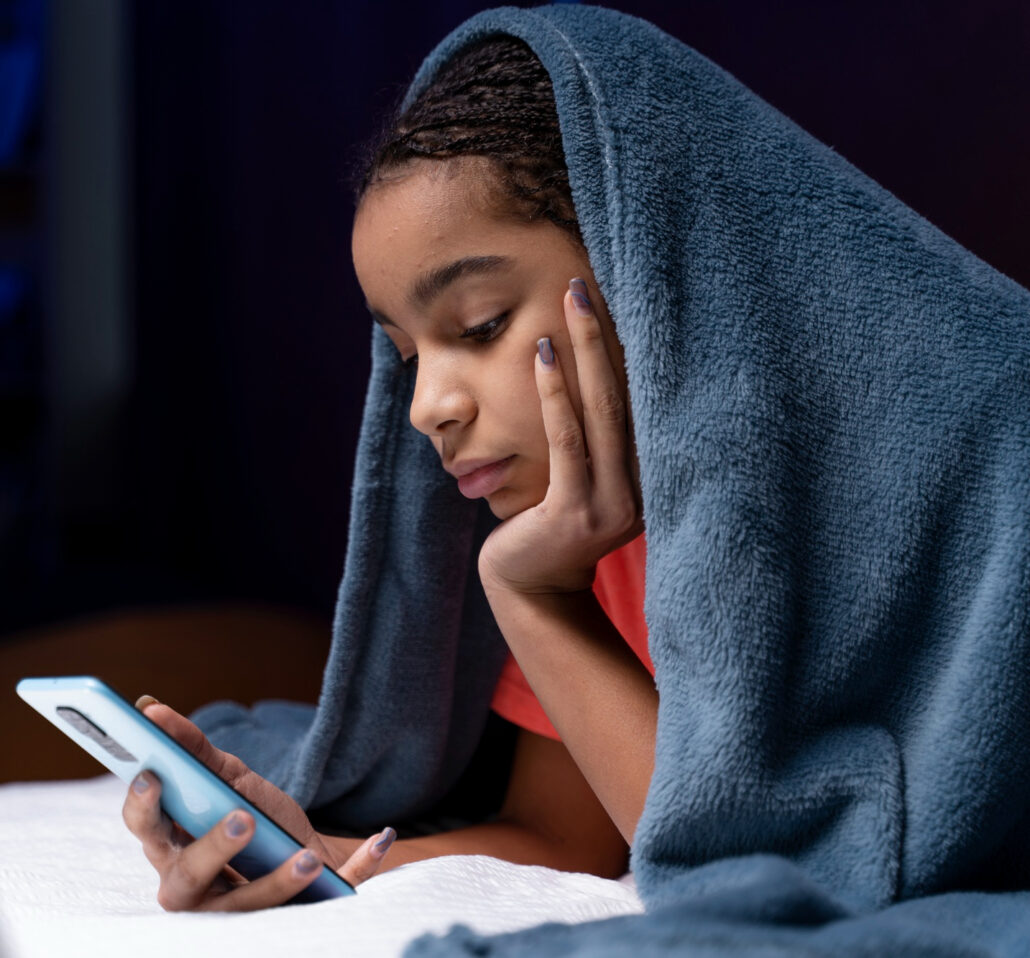
Researchers at Washington University in St. Louis are conducting a study to better understand how social media use affects preteen girls’ mental health and development.
Fast Facts

Girls 10 and 11 Years Old

Use Social Media (e.g., Instagram, Roblox, Pinterest)

Compensation Provided

Living in the St. Louis Region
Study Background
Our study aims to enhance understanding of the role of social media in preteen health and development.
Social media (like Instagram, YouTube, Pinterest, texting, Facetiming, shared Google docs, multi-player video games) can be risky for anyone, but especially for girls who are going through puberty. The complex dynamics of online connection add an extra challenge to an already difficult phase of life. In this research study, we want to find out more about how preteen girls use social media, in order to pinpoint its potential effects on mental health and development.
We are broadly interested in experiences that preteen girls have in all online spaces where they interact with others. This can include traditional social media platforms like Facebook or Tik Tok, messaging platforms like WhatsApp or GroupMe, and even online collaborative spaces like shared Google Docs or video games with chat features.
If you are a parent or caregiver of a girl who is 10 or 11 years old and uses social media, you and your preteen could be eligible to participate in this study. Help us advance research on protecting preteen girls’ mental health by joining GLO!
Study Background
Our study aims to enhance understanding of the role of social media in preteen health and development.
Social media (like Instagram, YouTube, Pinterest, texting, Facetiming, shared Google docs, multi-player video games) can be risky for anyone, but especially for girls who are going through puberty. The complex dynamics of online connection add an extra challenge to an already difficult phase of life. In this research study, we want to find out more about how preteen girls use social media, in order to pinpoint its potential effects on mental health and development.
We are broadly interested in experiences that preteen girls have in all online spaces where they interact with others. This can include traditional social media platforms like Facebook or Tik Tok, messaging platforms like WhatsApp or GroupMe, and even online collaborative spaces like shared Google Docs or video games with chat features.
If you are a parent or caregiver of a girl who is 10 or 11 years old and uses social media, you and your preteen could be eligible to participate in this study. Help us advance research on protecting preteen girls’ mental health by joining GLO!
Additional Information
Preteen girls are experiencing unprecedented rates of depression and suicidal thoughts. The aim of this study is to better understand social dynamics that arise in preteen girls’ social media use, so that we can discover how social media experiences might make some girls more susceptible to mental health issues. Eventually, we hope that the knowledge gained from this study will inform the development of new interventions and media guidelines to reduce the negative impacts of social media on preteen girls’ mental health.
Your child may qualify for the study if she meets the following criteria.
Inclusion Criteria:
- Girl ages 10 and 11 years old
- Uses social media
- Has a primary caregiver who is willing to participate along with her
Once enrolled, you will participate in:
- A virtual pre-screen
- Two weeks of remote data collection from preteen:
- Daily diaries
- Three-question surveys 8 times per day via a smart watch (provided)
- Three saliva samples
- In-person lab visit:
- Preteen completes clinical interviews, questionnaires, and EEG session
- Primary caregiver also completes clinical interview and some other measures
These procedures will be repeated 3 times: at enrollment, after 1 year, and after 2 years.
Families will be paid up to $300 per year over the course of 3 years for study participation, including a $50 bonus for completing all portions in year 3.
Total compensation up to $950.
There is no cost for you and your preteen to participate in our research study.