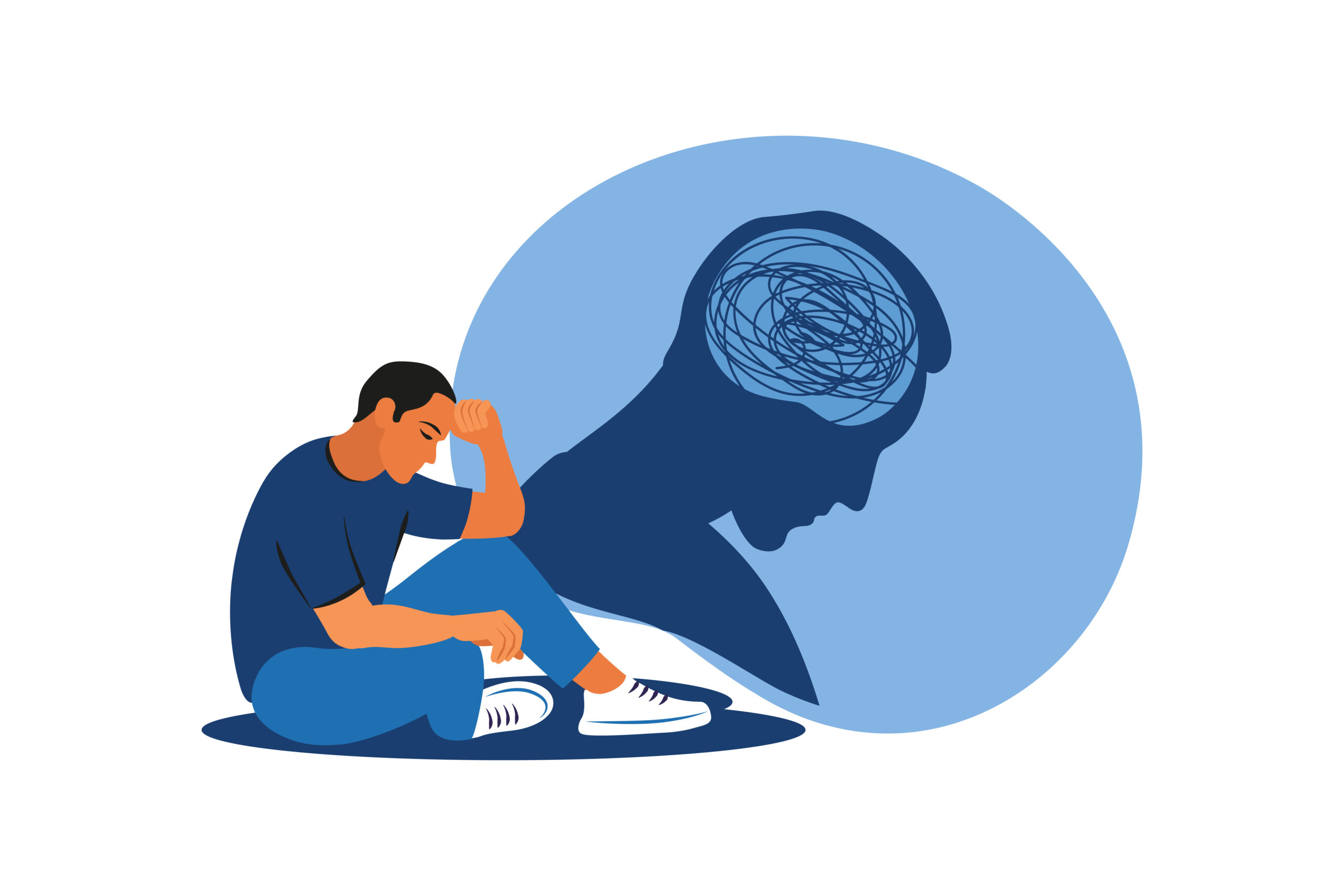
Researchers at the Grossman School of Medicine are conducting a study to test if noninvasive brain stimulation can improve heart rate variability in people with mild to moderate depression, aiming to develop an at-home treatment platform guided by heart rate data.
HRV-Guided tDCS: Integrating a Biomarker for Clinical Utility
This research study is testing a new, non-invasive method for measuring heart rate (HR) using a headset designed for transcranial direct current stimulation (tDCS). Participants with mild to moderate depression will use this device at home for 10 daily sessions, during which their heart rate will be monitored both through the headset and a standard chest strap. The goal is to see if this new method can reliably measure heart rate and explore whether changes in heart rate variability (HRV) could be used as an indicator of depression.
The study will take place remotely over about one month, with participants completing around 12 sessions via Zoom. They will fill out questionnaires, record heart rate data, and use the tDCS device from the comfort of their own homes. The researchers aim to develop a future at-home treatment platform that uses heart rate data to guide depression treatment, potentially offering a more personalized approach to care.
Study Background
HRV-Guided tDCS: Integrating a Biomarker for Clinical Utility
This research study is testing a new, non-invasive method for measuring heart rate (HR) using a headset designed for transcranial direct current stimulation (tDCS). Participants with mild to moderate depression will use this device at home for 10 daily sessions, during which their heart rate will be monitored both through the headset and a standard chest strap. The goal is to see if this new method can reliably measure heart rate and explore whether changes in heart rate variability (HRV) could be used as an indicator of depression.
The study will take place remotely over about one month, with participants completing around 12 sessions via Zoom. They will fill out questionnaires, record heart rate data, and use the tDCS device from the comfort of their own homes. The researchers aim to develop a future at-home treatment platform that uses heart rate data to guide depression treatment, potentially offering a more personalized approach to care.
This study is being done to test a new, non-invasive way to measure heart rate using a headset and see if changes in heart rate variability can be used as a marker for depression. The goal is to develop an at-home treatment platform that uses this data to guide depression care.