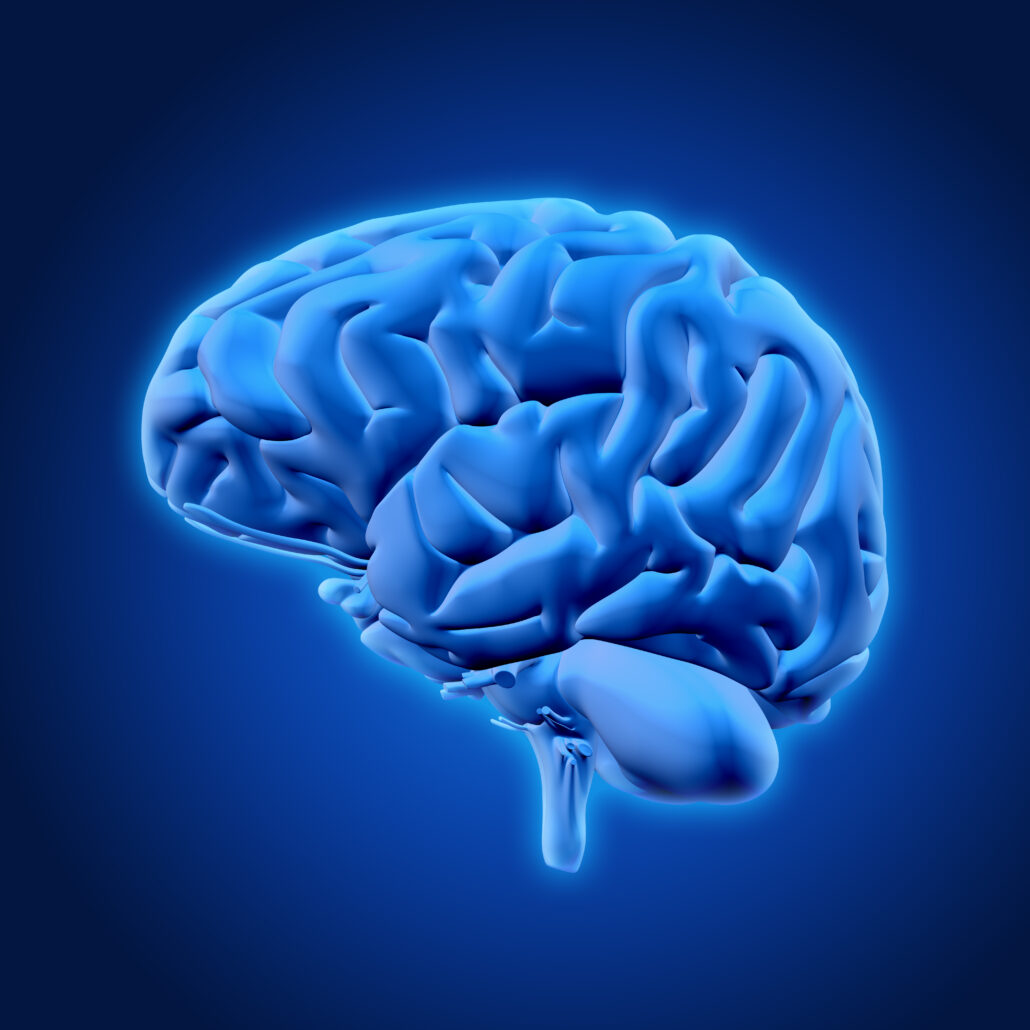
Researchers at The National Institute of Mental Health are conducting a study using PET imaging to measure the level of inflammatory enzymes present in the brains of individuals experiencing depression.
Researchers at The National Institute of Mental Health are looking for individuals experiencing symptoms of depression who are not taking psychiatric medication to participate in a clinical study.
Our researchers want to measure the level of an inflammatory enzyme, called PDE4B, present in the brains of people experiencing major depression. This enzyme is involved in behaviors related to dopamine and stress, and we want to find out whether PDE4B levels are lower in the brain during a major depressive episode.
To find out, we’ll measure a radiogland (tracer) drug during a PET scan of the brain. The tracer is considered investigational, which means that it has not been approved by the U.S. Food and Drug Administration (FDA). We are testing it in this research study to see if it can correctly measure PDE4B in the brain, and compare it to participants without depression.
Your participation in this study could help contribute to our collective knowledge about depression, which may one day lead to more effective treatments. Help advance research by enrolling today.
We are recruiting unmedicated patients to two studies, one focused on measuring the Cyclooxygenase-1 and Cyclooxygenase-2 enzymes, and the other measuring the Phosphodiesterase-4 enzyme.
Protocol ID# 20-M-0157 & 00676
Study Background
Researchers at The National Institute of Mental Health are looking for individuals experiencing symptoms of depression who are not taking psychiatric medication to participate in a clinical study.
Our researchers want to measure the level of an inflammatory enzyme, called PDE4B, present in the brains of people experiencing major depression. This enzyme is involved in behaviors related to dopamine and stress, and we want to find out whether PDE4B levels are lower in the brain during a major depressive episode.
To find out, we’ll measure a radiogland (tracer) drug during a PET scan of the brain. The tracer is considered investigational, which means that it has not been approved by the U.S. Food and Drug Administration (FDA). We are testing it in this research study to see if it can correctly measure PDE4B in the brain, and compare it to participants without depression.
Your participation in this study could help contribute to our collective knowledge about depression, which may one day lead to more effective treatments. Help advance research by enrolling today.
We are recruiting unmedicated patients to two studies, one focused on measuring the Cyclooxygenase-1 and Cyclooxygenase-2 enzymes, and the other measuring the Phosphodiesterase-4 enzyme.
The goal of this study is to use PET imaging to measure the level of inflammatory enzymes present in the brains of individuals experiencing depression.
You may qualify for this study if you meet the following criteria.
Inclusion Criteria:
Experiencing a major depressive episode lasting at least four weeks
18-70 years old
Not taking psychiatric medication
Comfortable with needles
Able to travel to the study site in Bethesda, MD (note: taxi services and mileage may be provided for people located within 50 miles)
Key Exclusion:
Participants must be free of all prohibited medications or at least two weeks (5 weeks for aripiprazole, brexpiprazole, fluoxetine) prior to the screen visit. These medications include antidepressants, anti-inflammatory drugs (except for study medication celecoxib), antipsychotics, anti-anxiety medications (stimulants, mood stabilizers, herbal products) to treat mental health symptoms, and tranquilizers/sedatives/hypnotics.
Participants with a history of substance use disorder (except for caffeine or nicotine dependence) or alcohol use disorder, within the preceding three months. However, alcohol or cannabis use by themselves are not exclusion criteria, unless that use impairs function.
Are unable to have an MRI scan; e.g., because of pacemakers or other implanted electrical devices, brain stimulators, dental implants, aneurysm clips (metal clips on the wall of a large artery), metallic prostheses (including metal pins and rods, heart valves, and cochlear implants), permanent eyeliner, implanted delivery pumps, shrapnel fragments, or metal fragments in the eye.
Both studies will require 1-5 visits, depending on which group you are eligible for:
Initial evaluation: The first appointment is a screening evaluation which typically takes 4-6 hours and involves a physical exam, a blood draw, and a psychiatric evaluation.
Brain PET scans visit: The second visit is for the PET scan(s), which have a duration of 90-120 minutes, and the total appointment length is 6-8 hours. The PET scans give information on chemistry and function of molecules in the brain and body. For the brain PET scans, a small amount of the investigational tracer (18F PF-06445974) will be injected through an intravenous (IV) catheter. You will have a second catheter put into an artery at your wrist or the inside of your elbow for arterial blood sampling, where we will use the catheter to draw blood during the study.
Brain MRI visit: The MRI scanner is a metal cylinder surrounded by a strong magnetic field. You’ll be asked to lie on a narrow bed that will move into the MRI scanner. You will be in the scanner for about 30 – 60 minutes. This is typically its own visit and will take no more than 2 hours, but can be done on the same day as a brain PET scan if possible.
There is no cost for you to participate in our research study.
We are able to provide taxi services to people located within 50 miles of the NIH. We are unable to reimburse for metro or Uber/Lyft. We are able to reimburse for mileage.
The views expressed in these materials [or by participants at the event, etc.] do not necessarily reflect the official policies of the U.S. Department of Health and Human Services, the NIH or its components; nor does the inclusion of trade names/logos/trademarks/or references to outside entities constitute or imply an endorsement by any Federal entity.