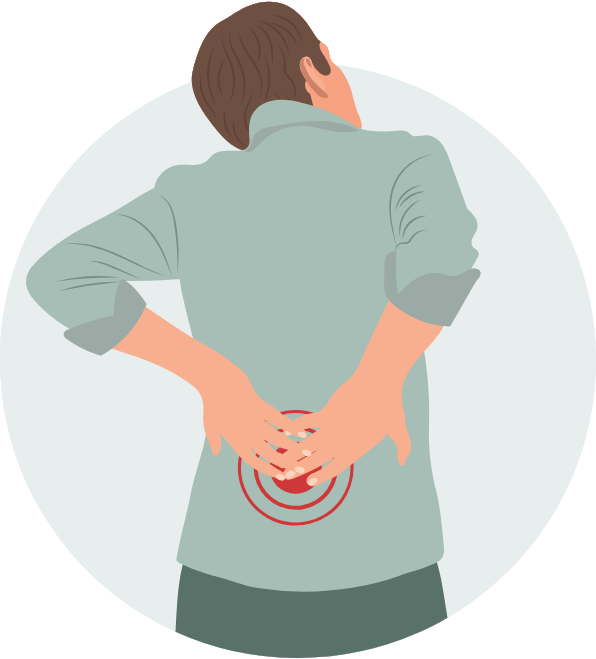

Back Pain Research Study

Researchers at the University of California San Diego are conducting a study on chronic low back pain and depression to better understand what factors most influence pain levels.

Fast Facts

Have chronic low back pain

Experiencing depressive symptoms (e.g., persistent sadness, loss of interest in activities, changes in sleep or appetite)

Compensation

Provided

Conducted in

San Diego, CA

Study Background

This study aims to uncover what factors, such as sleep, physical activity, stress, or mood, most affect chronic low back pain in individuals who also experience symptoms of depression.

Chronic low back pain is the most common chronic pain condition, and up to half of those affected also experience symptoms of depression. While research has identified many possible contributors to both pain and mood, it has been difficult to determine which factor matters most for each individual.

This study uses innovative wearable technology and advanced machine learning to address that gap. By collecting real-world data over 30 days, researchers aim to identify the most impactful factors behind pain variability. Participants will also receive personalized feedback about which factors most influence their pain, information that could help guide future self-care or treatment decisions.

Study Background

This study aims to uncover what factors, such as sleep, physical activity, stress, or mood, most affect chronic low back pain in individuals who also experience symptoms of depression.

Chronic low back pain is the most common chronic pain condition, and up to half of those affected also experience symptoms of depression. While research has identified many possible contributors to both pain and mood, it has been difficult to determine which factor matters most for each individual.

This study uses innovative wearable technology and advanced machine learning to address that gap. By collecting real-world data over 30 days, researchers aim to identify the most impactful factors behind pain variability. Participants will also receive personalized feedback about which factors most influence their pain, information that could help guide future self-care or treatment decisions.

Additional Information

Researchers want to better understand what factors drive day-to-day changes in chronic low back pain for people who also experience depression symptoms. The goal is to advance precision medicine for chronic pain management.

You may be eligible for this study if you meet the following criteria.

Inclusion Criteria:

  • Have chronic low back pain
  • Experiencing depressive symptoms (e.g., persistent sadness, loss of interest in activities, changes in sleep or appetite)
  • No dependence on unprescribed substances
  • Have not had back surgery in the last 6 months
  • Own a smartphone
  • No recent changes in pain or mood treatment (such as stopping treatment or increasing medication dosage)
  • No psychotic or bipolar disorder
  • You will attend an initial visit at the UC San Diego medical campus in La Jolla to complete questionnaires and brief lab assessments (such as EEG-monitored games and pain perception tasks).

  • You’ll receive an Oura Ring and download the study smartphone app.

  • Over the next 30 days, you’ll wear the Oura Ring and respond to daily smartphone notifications.

  • At the end of the study, you’ll return for a final visit to return the ring and receive personalized results from the machine-learning analysis.

Participants will receive up to $390 for completing the study. As an additional benefit, participants will receive feedback on which factors, such as sleep, diet, mood, stress, or social interactions, are most predictive of their pain.

There is no cost for you to participate in our research study.