
Mild Cognitive Impairment and Insomnia Study
Researchers at Beth Israel Deaconess Medical Center are testing a new way to treat insomnia using Transcranial Magnetic Stimulation combined with Cognitive Behavioral Therapy.
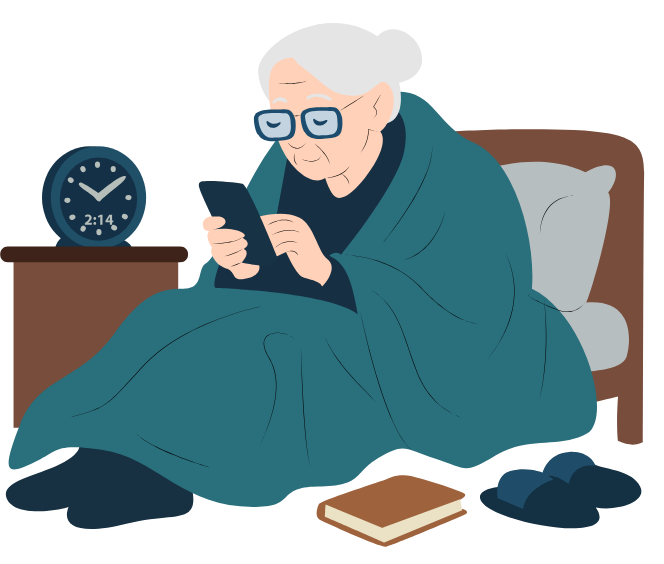
Fast Facts

Concerns About Sleep & Memory

60+
Years Old

Compensation
Provided Up To $550

Conducted In
Boston, MA
Study Background
Treating Insomnia in Mild Cognitive Impairment
We are testing a new way to treat insomnia using Transcranial Magnetic Stimulation, a safe and gentle way to apply magnetic pulses to the brain, alongside Cognitive Behavioral Therapy, which is a type of treatment designed to change negative or unhelpful patterns of thinking and behavior.
Participation in this study lasts approximately 3-4 months plus a 6-month follow-up that is completed remotely. The study includes 12 in-person visits to BIDMC during the first month, including 10 daily sessions of Transcranial Magnetic Stimulation (TMS) therapy over 2 weeks. After that, you would complete a 6-9-week Cognitive Behavioral Therapy for Insomnia (CBT-I) program from the comfort of your own home using the Internet.
The first in-person visit will be a screening visit during which you will be asked to answer some questions about your medical history and memory and to give a blood sample. The second in-person visit will involve an MRI scan of your brain and additional tests of your memory and thinking. The rest of the in-person visits will involve sitting in a comfortable chair to undergo the TMS treatments.
If you are over 60 years old and have concerns about your memory and problems sleeping, you could be eligible for this important study. Be a part of advancing sleep research to improve the lives of people like you.

Study Background
Treating Insomnia in Mild Cognitive Impairment

We are testing a new way to treat insomnia using Transcranial Magnetic Stimulation, a safe and gentle way to apply magnetic pulses to the brain, alongside Cognitive Behavioral Therapy, which is a type of treatment designed to change negative or unhelpful patterns of thinking and behavior.
Participation in this study lasts approximately 3-4 months plus a 6-month follow-up that is completed remotely. The study includes 12 in-person visits to BIDMC during the first month, including 10 daily sessions of Transcranial Magnetic Stimulation (TMS) therapy over 2 weeks. After that, you would complete a 6-9-week Cognitive Behavioral Therapy for Insomnia (CBT-I) program from the comfort of your own home using the Internet.
The first in-person visit will be a screening visit during which you will be asked to answer some questions about your medical history and memory and to give a blood sample. The second in-person visit will involve an MRI scan of your brain and additional tests of your memory and thinking. The rest of the in-person visits will involve sitting in a comfortable chair to undergo the TMS treatments.
If you are over 60 years old and have concerns about your memory and problems sleeping, you could be eligible for this important study. Be a part of advancing sleep research to improve the lives of people like you.

Additional Information
The goal of this study is to test a new way to improve sleep quality in people who struggle with falling or staying asleep and have concerns about their memory and thinking (including those with mild cognitive impairment). The treatment combines a safe and gentle way to stimulate the brain, called transcranial magnetic stimulation (TMS), with a psychological treatment, called cognitive behavioral therapy for insomnia (CBT-I).
You may be eligible for this study if you meet the following criteria.
Inclusion Criteria:
- Ages 60+
- Having difficulties sleeping
- Experiencing changes in memory or thinking, or diagnosed with mild cognitive impairment (MCI)
Exclusion Criteria:
- Untreated sleep disorder (e.g., Restless Leg Syndrome, Periodic Limb Movement Disorder, parasomnia) including uncontrolled sleep apnea
- Diagnosis of Parkinson’s disease, Huntington’s disease, Lewy-Body disease, or other neurological condition known to impact sleep
- Current diagnosis of major psychiatric disorder (with the exception of well-controlled depression or anxiety)
- Current opiate/opioid use
All in-person visits take place at Beth Israel Deaconess Medical Center in Boston.
Visit 1, Screening and Consent (in-person, 5-6 hours): Review the consent paperwork, collect demographics information, as well as do a fasting-blood draw with our nurses and a short exam with our study neurologist. The consent paperwork will have all the details of the study, and there will be time to ask the study team any questions. Afterwards, we’ll do some longer cognitive testing with breaks for breakfast and lunch (both are provided).
Visit 2, MRI and Neuropsychological Testing (in-person, 5 hours): MRI lasting less than an hour followed by cognitive testing related to evaluating memory, thinking, and other brain functions. Lunch is provided.
Visit 3, TMS-EEG (in-person, 5-6 hours): Receive TMS treatment while wearing EEG cap to collect measurements of how your brain responds to the treatment. All TMS treatments are administered while seated in a comfortable recliner chair. Lunch is provided.
Visits 4-12, TMS (in-person, 1-2 hours): Receive TMS treatment. All TMS treatments are administered while seated in a comfortable recliner chair. Snacks are provided.
Visit 13, Intermediate Assessments (remote and scheduled within a few days after Visit 12): Reassessments of cognition, sleep, and mood.
Cognitive Behavioral Therapy for Insomnia (remote and asynchronous): The self-guided, fully-automated CBT-I program is completed at home using the Internet. The program is divided into 6 parts, and each part begins about 7 days after completing the last one (completion takes 6-9 weeks). You will interact with the program to set goals, review your progress, test your knowledge, and watch short videos of patients’ experiences and experts’ explanations.
Visit 14, Post-CBT Assessments 1 (remote, 1-2 hours; scheduled ~9 weeks after Visit 13): Reassessments of cognition, sleep, and mood.
Visit 15, Post-CBT Assessments 2 (remote, 1-2 hours; scheduled ~6 months after Visit 14): Reassessments of cognition, sleep, and mood.
Participants will fill out “sleep diaries” briefly describing their sleep the night before during the following periods: (1) for two weeks BEFORE starting the CBT-I program, during TMS therapy, (2) during the CBT-I program, (3) for two weeks at the end of the CBT-I program, and (4) for two weeks approximately 6 months after completing the CBT-I program.
Participants will wear an “activity watch” during the following periods: (1) for two weeks BEFORE starting the CBT-I program, (2) for two weeks at the end of the CBT-I program, and (3) for two weeks approximately 6 months after completing the CBT-I program. The watch can be worn during all normal activities (bathing/showering, exercising, etc.) and nothing needs to be done to the watch other than wear it.
Yes. The maximum payment is $550 for completing all parts of the study. Parking vouchers and transportation assistance are available.
There is no cost for you to participate in our research study.